Mali national dialogue
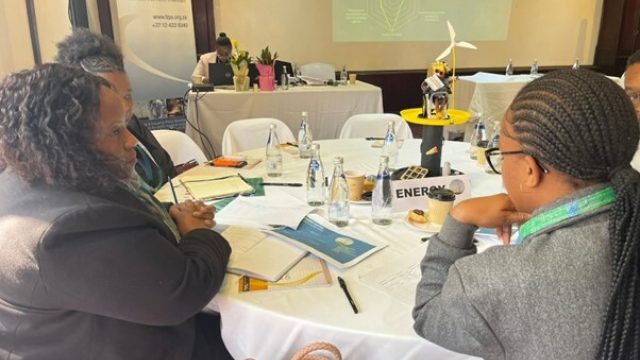
In March 2011, the Mali-Folkecenter invited partners from government, civil society and international organisations for a 2-day workshop in Bamako to discuss green economics policies that are relevant to Mali’s ecological and cultural context.
With Mali's economy being highly dependent on natural resources, especially agriculture, the likely rise in temperatures and resulting rainfall variability threatens its core economic sectors. Also, the country is landlocked, so it currently relies on oil for transport, making it vulnerable to rising energy prices.
It is thus high time to test out the implementation of adaptation plans to build resilience and prosperity.
The participants stressed that key for a transition will be productive investments in green activities, including better management of environmental assets, building farmers’ knowledge to improve soil fertility and diversifying the economy.
For Mali, greening the economy is particularly important in the following sectors:
- Agriculture and forestry
- Water resources
- Energy and climate change
- Investment and employment
While Mali leads in developing far-sighted strategy, the main challenge will be to improve implementation and administrative capacity. The participants agreed to set up a ‘Coalition National pour une Economie Verte’, which will discuss the next steps with key partners, debate possible green solutions and identify productive green investments. Further efforts are under way to integrate the concept of GE into Mali’s 2012-17 Poverty Reduction Strategy Papers (PRSP).
For a more in-depth account of the Mali National Dialogue, please have a look at the Mali summary paper.
For more information, contact Ibrahim Togola (Mali Folkecenter) and Kate Lines (IIED)