Brazil national dialogue
Vitae Civilis Institute, working in partnership with the Coalition, are holding a series of regional and thematic seminars and consultation throughout 2010 and 2011, to raise awareness among social and economical actors, to establish networks to influence public policies and mainstream decision makers, and significantly shape the inputs to Rio 2012.
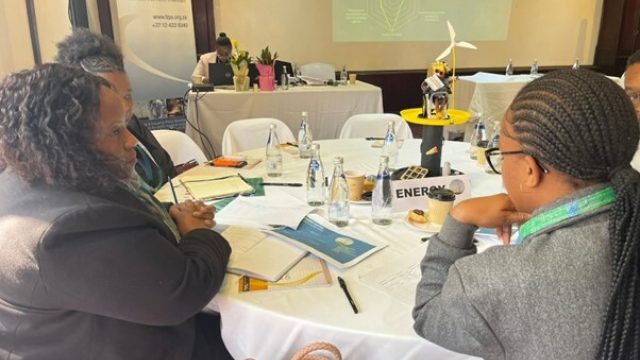
In November 2010, in partnership with IIED, they brought together 135 delegates from a wide range of sectors for a two-day meeting in Sao Paulo to start this two-year process of debates and workshops focusing on the transition to a green economy.
Brazil has enormous potential for the realisation of a green economy. The country runs on a diverse energy mix, it has access to green technologies and information as well as high biological capacity and natural resources with rich biodiversity. There is a strong level of awareness within the country of the strategic benefits a timely transition to a green economy might bring.
The participants stressed that the green economy should be considered a process, aiming at improved human well-being and social equity while creating value for nature. It should be seen as a means to achieve sustainable development, which must bridge economics, social and environmental aspects.
Ideas to accelerate the transition to a green economy included
- providing incentives for a green economy through taxation policies, financing mechanisms, valuation of public goods and charging for externalities
- promoting alternatives to a consumer society
- Protecting small producers and creating employment through skilling
- Strengthening public policies about sustainability
- Educating about the 'good life'
- the valorization of natural and protected areas
Some participants raised concerns that the green economy concept could be misused as a means to weaken Brazil's competitiveness, so any misrepresentation of the green economy must be denounced. However, there was wide agreement that the next steps should promote further participation and dispel scepticism in society through education and social action.
For a more in-depth account of the dialogue, read the Brazil summary paper in English or Portuguese.
These key messages are informing the work of the GEC Rio policy working group.
The Brazilian national dialogue process is now ongoing. Regional and thematic discussions are currently taking place, and a second national seminar will be held in October 2011.
For more information contact:
Aron Belinky (Vitae Civilis) and Kate Lines (IIED)
![]()
![]()