Governing a green economy
Over the last few years the concept of a green economy has crept from the fringes of political discourse and into the mainstream. Whilst the term may feel like a new concept, it is a vision that is founded on forty years of thinking on sustainable development. That vision is for an economy that produces a range of social and environmental, as well as economic, benefits for individuals, communities, and society overall. It is a vision of environmental governance that restores and protects the resilience of ecosystems and the biodiversity within them, and thus secures the many services they provide. It is a vision of development that uses natural resources sustainably, allocating environmental benefits and costs fairly to achieve a more just and equitable society.
So, what are the key characteristics of an effective governance system at an international level that can help deliver these assets around the world? I propose three major elements that could usefully inform the incremental progress we should aim for over the coming three to four decades
- a shift from development aid to payments for public goods;
- a leveling of the playing field so that environmentally sound and socially just practice is rewarded across the spectrum;
- active support for local diversity and accountability as critical factors in building economic resilience.
First, there needs to be socially just payments for public goods. We can already see the rapid emergence of a system intended to increase global capacity to address the impacts of climate change, and to help secure the benefits of a stable and functioning climate system for the planet. This already demonstrates the potential for money and other forms of support to be transferred that dwarfs the aid budget (notwithstanding huge flaws in governance and lack of vision). It seems highly unlikely, given current trends and political pressures, that “official development assistance” in its current form will still exist by 2050. In its place, and at much more ambitious levels, we could be in a position where a range of public goods are funded through instruments that act as a tax on “bads” and reward “goods”. Countries should be enabled to shift from reliance on aid to receiving payment for services that safeguard significant resources.
Crucial to the success of this transformation would be to avoid creation of some gargantuan bureaucracy, but rather to facilitate the effective transfer of funds and other resources (know how, innovations etc.) through a diversity of channels. An inter-governmental governance framework is necessary to provide oversight and legitimacy, but not to dominate the activities. A second crucial factor is to recognise and respond to demand for support.
Development to date has been overwhelmingly supply driven; a future alternative should recognize local specificity and particular contexts in which positive change is possible and find ways to support these effectively.
The implications of this shift are huge – and there’s no space to explore them further here. However, one significant implication should be the strengthening of local and national systems of accountability if, for example, decisions on use of development funding are taken more by locally-elected officials through an open process which responds to a contestation of possible uses. In short, integrating development assistance into locally and nationally driven democratic institutions and processes has potential to bolster democracy while also improving the effectiveness in targeting and use of funds. This is no magic bullet, and clearly there are many possible problems in application – but the principle is hugely important.
Second, it is time to level the playing field. It is quite clear that there are huge barriers to moving towards a greener global economy and society that are built into the fabric of our world. Our system of shareholder value imposes a terrifyingly short time horizon on all publicly listed companies. Our economic models and accounting systems exclude environmental costs and assets from calculations, which means these still have little value in financial terms. As above, international development governance is not best placed to oversee and “manage” each of these areas; what we need is the capacity to assess where prevailing rules and instruments are reinforcing unsustainable practice and the means to challenge them.
This kind of approach will only be effective if it demonstrates three characteristics. The first of these is the capacity to prioritise: there are a multitude of things wrong with the way the world functions that have a negligible impact on critical sustainability factors, and a limited number which have a seismic global effect. It will be essential to identify the most important international governance changes that are needed and present a clear and compelling case for change.
The second characteristic is subsidiarity: only issues that cannot be resolved at lower levels of governance should be tackled at global level. Fruitless efforts to negotiate a global convention on forests in the mid-1990s provide a salutary example of this: a globally binding instrument on forests proved impossible to negotiate and premised action at the wrong level, when regional and national frameworks locate responsibility closer to the particular governance context where decisions and trade-offs are exercised.
The third attribute needed is power, or agency: as we have seen earlier, being able to identify problems and propose solutions is of little value if the perpetrators are able to ignore the prognosis and calls for change.This is of course a long way from the realities we face today, and it is hard to see how we could arrive at a governance regime able to achieve this level of influence. However, an effective and coherent global system would require this capacity to identify and change existing drivers of change.
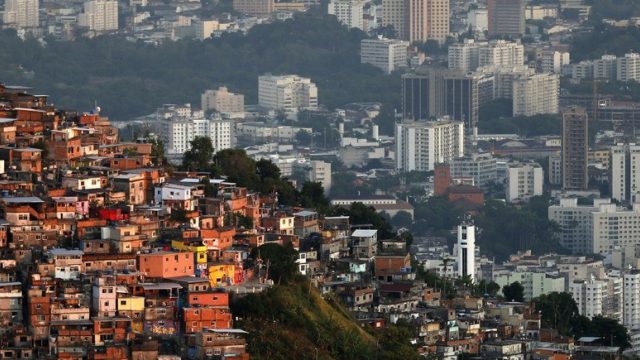
Lastly, local diversity and accountability must be supported. Most of the critical factors in determining whether the “green economy” becomes a reality will be played out at local and national levels. The governance and planning of urban centers will be (and already are) crucial in determining future patterns of energy use, employment, consumption of natural resources, rewards for livelihoods, and so on. Opportunities to create ”green jobs” depend less on international factors than on local characteristics (e.g. the availability of skilled labor; regulations and incentives put in place by local and national governments; investment options; comparative advantage through location, natural resources etc.). Accountability for decisions taken and policy coherence is most needed at local level, to ensure that progress made in meeting social and environmental needs through one means are not wiped out through conflicting measures or actions.
All of this takes place outside the purview of international governance. Where there is a key role for some form of global action is in legitimising such activity where useful, in making connections between different contexts to enable learning and collaboration, and in addressing trans-national factors that impede progress at lower levels of governance.
This article has been adapted from ‘Development Governance and the Green Economy: A matter of life and death?’ for Pardee Center Task Force Report