Natural world
A green economy is one that invests and restores our ecosystems and biodiversity in order to secure their services forever. Here issue experts share practical suggestions on valuing and managing our natural capital.
Exploring opportunities for green growth in the Greater Mekong
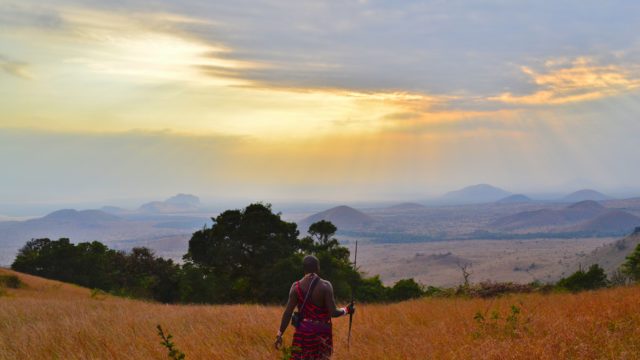
Spanning dusty savannahs, dense rainforests and vast river flows, the Greater Mekong Sub-Region (GMS) is one of the most biologically diverse and agriculturally rich areas of the world. Flowing from its headwaters in the Tibetan plateau down to the Vietnam delta, the Mekong River unites six diverse countries in a collective economic as well as ecological future (Cambodia, the People's Republic of China, Lao People's Democratic Republic (Lao PDR), Myanmar, Thailand, and Vietnam).
... Continue reading‘Sandy’ tells us why the climate change denial must stop
I start this blog on climate politics as tropical superstorm Sandy expends its fury on the eastern coast of the US. The satellite imagery shows the movement of the gathering storm as it builds and breaks over land, bringing with it massive destruction and massive upheaval in the wealthiest and most powerful nation of the world. It speaks of the extraordinary power of nature and should leave us both shocked at the possibilities of destruction but also in awe of its sheer force. This is the shock and awe that we need to know more about.
... Continue reading¿Es posible proteger los derechos de la Naturaleza en una economía verde?
Los informes sobre los problemas ambientales o la pérdida de biodiversidad no son nuevos. Desde los años 60, ha crecido la información acerca de los impactos ambientales producto de las estrategias de desarrollo convencionales basadas en el crecimiento económico. La crisis ambiental actual refleja que las alertas han sido ignoradas.
... Continue readingThe value of valuing ecosystem services
Last week at the BioEcon Conference in Cambridge economists from all over the world gathered to share experiences on how to value ecosystem services, and how to incorporate these valuations into decision-making. I joined the workshop as a ‘practicing economist’, working with IIED and partners in developing countries where the environmental threats are ever present, the data is never there, funds are always scarce, and the message needs to be clear, and on time. What are my impressions on how to make our research more useful?
... Continue readingThe new adventurers – de-couplers, zeronauts and net-positives
Many of us often complain about the slow pace of change – the slow trudge towards a green economy – but there are reasons to be excited. So many business plans are getting a real make-over right now.
... Continue readingDo conservationists back the green economy?
As we speak over 8000 delegates from over 150 countries are pouring onto a South Korean island in the East China Sea to discuss the future of conservation and development.
... Continue readingA green economy beats in the Heart of Borneo
The Heart of Borneo is a vast and largely intact stretch of globally significant rainforest that cloaks the mountains, foothills and adjacent lowlands of Borneo, the third largest island in the world. In February 2007, Indonesia, along with Brunei and Malaysia - its two governing partner countries on Borneo - signed the Heart of Borneo (HoB) Declaration. A sign of their commitment to conserve and sustainably develop a 220,000km2 treasure trove of unique and endangered animals such as the Orangutan and Pigmy elephant, and magnificent plants, such as the world’s larges... Continue reading
Costa Rica: growing money on trees?
Controversy stalks the green economy concept, even as it topped the agenda of world leaders at the Rio+20 summit. Its detractors say it spells a commodification of nature that will transfer money, power and land to elites and corporations while supporters counter that our collective failure to value nature is why forests and other ecosystems are in such trouble.... Continue reading
Can we protect the rights of Nature in a Green Economy?
Reports of environmental problems or biodiversity loss are not new. Since the 60s, there has been an increasing amount of information about the environmental impacts of conventional development strategies based on economic growth. The present environmental crisis indicates that those alerts have been ignored.
...
Continue reading
Drip feeding water into the Green Economy
We are used to reading fluid and fluctuating news on water. We may have too much or too little rain, crops desiccate or they rot, or we hear about severe drought, or floods leading to widespread famine, displacement or economic damage. Everybody wants water when it is scarce (but they usually don’t pay more in times of scarcity) and the costs of protecting citizens against its adverse effects are externalised to the public purse. With year to year, or even week to week, fluctuations in the status of such a precious natural resource, what would be the perfect place for water within a Green Economy? How could we know when we have reached an optimal and sustainable management of our available water? With so many environmental and social externalities associated with every drop of water, how much should water cost the user?
... Continue reading